For years, businesses have focused on one primary goal in digital marketing: getting users to click on their websites. Higher rankings meant more traffic, and more traffic often led to more leads and sales. However, the search landscape is changing rapidly.
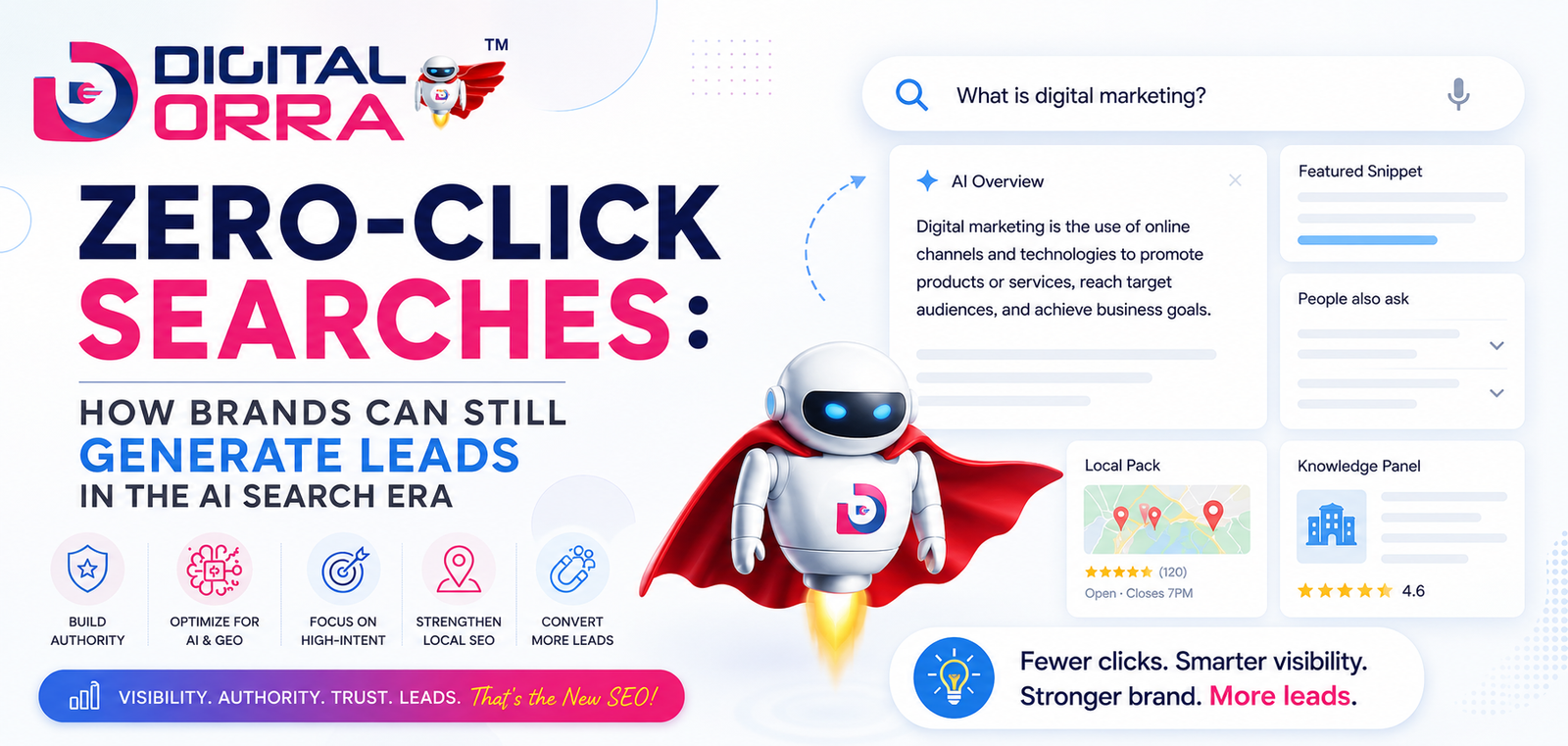
With the rise of Google AI Overviews, Featured Snippets, Knowledge Panels, Local Packs, and AI-powered search engines, users are increasingly finding answers directly on the search results page without visiting a website. These interactions are known as Zero-Click Searches.
While this trend may seem concerning for businesses that rely heavily on organic traffic, it also presents new opportunities. Brands that adapt their digital marketing strategies can continue generating high-quality leads, building authority, and growing their customer base.
Let’s explore how businesses can succeed in the era of zero-click searches.
What Are Zero-Click Searches?
A zero-click search occurs when a user receives the information they need directly from the search engine results page (SERP) without clicking on any website.
Common examples include:
- Google AI Overviews
- Featured Snippets
- Knowledge Panels
- Local Business Listings
- People Also Ask Sections
- Weather and Calculator Results
- Direct Definitions and Answers
For example, if someone searches “What is SEO?” Google may provide a detailed explanation directly on the results page. The user gets the answer instantly and may never visit a website.
As AI-powered search experiences continue to evolve, these zero-click interactions are becoming increasingly common.
Why Zero-Click Searches Are Growing
Search engines are prioritizing user convenience. Their goal is to provide answers as quickly as possible.
Several factors are driving this trend:
AI-Powered Search Experiences
Google’s AI Overviews and generative search capabilities summarize information from multiple sources, allowing users to receive complete answers instantly.
Mobile Search Behavior
Mobile users prefer quick answers without navigating multiple websites.
Voice Search Adoption
Voice assistants typically provide a single answer rather than a list of links, contributing to zero-click behavior.
Improved Search Features
Modern search engines offer maps, reviews, FAQs, business information, and direct responses without requiring additional clicks.
Why Traditional SEO Alone Is No Longer Enough
Traditional SEO focuses heavily on rankings and traffic. While rankings remain important, they are no longer the sole indicator of success.
A page may rank #1 but still receive fewer clicks because users find answers directly on the search results page.
This means businesses must shift their focus from:
Traffic-Only Strategy
to
Visibility + Authority + Conversion Strategy
The brands that consistently appear across search features and AI-generated answers often gain trust even when users don’t immediately visit their websites.
The Hidden Opportunity in Zero-Click Searches
Many businesses view zero-click searches as a threat. In reality, they can become a powerful branding opportunity.
When your brand repeatedly appears in:
- AI-generated responses
- Featured snippets
- Local search results
- Industry resources
- Expert citations
Users begin recognizing your expertise.
Brand familiarity significantly influences purchasing decisions. Even if users don’t click today, they may remember your brand when they are ready to buy.
How Brands Can Generate Leads Despite Fewer Clicks
1. Build Strong Brand Authority
Authority has become one of the most valuable digital assets.
To establish authority:
- Publish original research
- Create expert-driven content
- Share industry insights
- Produce comprehensive guides
- Maintain consistent branding
When search engines and AI systems identify your website as a trustworthy source, your content is more likely to appear in search summaries and AI-generated answers.
2. Optimize for AI Search and GEO
Generative Engine Optimization (GEO) is becoming increasingly important.
GEO focuses on improving visibility within AI-generated search results.
Best practices include:
- Using clear headings and subheadings
- Answering common questions directly
- Publishing factual and authoritative content
- Structuring information logically
- Adding FAQ sections
- Using schema markup
Content that is easy for AI systems to understand is more likely to be referenced in AI-generated responses.
3. Focus on High-Intent Keywords
Not every search results in a zero click.
Many commercial and transactional searches still require users to visit websites.
Target keywords such as:
- Best digital marketing agency
- SEO services near me
- AI SEO consultant
- Website development company
- Lead generation services
Users searching these terms are often closer to making a purchase decision.
4. Strengthen Local SEO
Local businesses continue to benefit from search visibility even when users do not visit their websites.
Optimize your:
- Google Business Profile
- Business descriptions
- Contact information
- Customer reviews
- Service areas
Many users call businesses directly from local search results without ever visiting a website.
This is still a valuable lead.
5. Create Lead Magnets
When visitors do reach your website, maximize conversion opportunities.
Offer:
- Free consultations
- Website audits
- SEO reports
- Industry checklists
- E-books
- Webinars
Lead magnets help capture prospects who may not be ready to buy immediately.
6. Diversify Traffic Sources
Relying solely on Google traffic is becoming risky.
Successful brands are investing in:
- LinkedIn marketing
- YouTube content
- Email marketing
- Industry communities
- Podcasts
- Social media platforms
A diversified marketing strategy protects businesses from search algorithm changes.
The Role of Content in the Zero-Click Era
Content remains one of the strongest marketing tools available.
However, content strategies must evolve.
Instead of producing generic articles, focus on:
Experience-Based Content
Share real examples, case studies, and practical insights.
Thought Leadership
Offer expert opinions and industry analysis.
Problem-Solving Content
Answer specific customer questions.
Comprehensive Resources
Create content that becomes the definitive resource on a topic.
The more valuable your content, the greater the likelihood of being cited by search engines and AI systems.
Key Metrics Businesses Should Track
As search behavior changes, marketers should monitor new performance indicators.
Important metrics include:
- Brand search volume
- Lead quality
- Conversion rate
- Google Business Profile actions
- AI citations
- Engagement rate
- Customer acquisition cost
- Returning visitors
These metrics often provide better business insights than traffic alone.
Common Mistakes Businesses Make
Focusing Only on Rankings
High rankings no longer guarantee high traffic.
Ignoring Brand Building
Brand recognition influences purchasing decisions more than ever.
Publishing Generic AI Content
Low-quality content struggles to stand out in competitive markets.
Neglecting User Experience
Even if users arrive on your website, poor design and slow loading speeds can reduce conversions.
Failing to Adapt
Businesses that continue relying solely on traditional SEO strategies may lose visibility over time.
The Future of Search and Lead Generation
The future belongs to brands that understand visibility is no longer limited to website clicks.
Search engines are evolving into answer engines. AI systems are becoming discovery platforms. Consumers are interacting with information differently than ever before.
Businesses that prioritize:
- Brand authority
- AI visibility
- GEO optimization
- Customer trust
- High-quality content
- Multi-channel marketing
will continue generating leads regardless of how search technology evolves.
Conclusion
Zero-click searches are transforming the digital marketing landscape. While businesses may see fewer website visits from informational searches, this does not mean fewer opportunities.
The focus is shifting from simply earning clicks to earning visibility, trust, and authority.
Brands that embrace AI search optimization, build strong digital authority, and create valuable content will continue attracting qualified leads in 2026 and beyond.
The goal is no longer just to rank higher. The goal is to become the brand that users and AI systems trust most.