
Growing a business today is about more than offering a great product or service. Customers search online, compare brands, read reviews, and expect businesses to have a strong digital presence before making a purchase. That’s why digital marketing is no longer optional—it’s an essential investment for sustainable growth.
One of the biggest questions business owners ask is, “How much should I spend on digital marketing?” While there isn’t a one-size-fits-all answer, having a well-planned digital marketing budget helps you attract more customers, generate qualified leads, and maximize your return on investment (ROI).
In this guide, we’ll explain how to plan a practical digital marketing budget that supports your business goals in 2026.
Why Every Business Needs a Digital Marketing Budget
Many businesses spend money on marketing only when sales slow down. This reactive approach often leads to inconsistent results and wasted resources.
A dedicated marketing budget allows you to:
- Generate consistent leads throughout the year
- Increase brand awareness
- Stay ahead of competitors
- Improve customer engagement
- Measure marketing performance effectively
- Scale your business with confidence
Instead of treating marketing as an expense, successful companies view it as an investment in long-term growth.
Factors That Influence Your Marketing Budget
Before deciding how much to invest, consider these important factors.
1. Business Stage
A startup has different marketing needs than an established business. New businesses usually need to invest more in building brand awareness, while established businesses focus on scaling and customer retention.
2. Industry Competition
Highly competitive industries such as real estate, healthcare, education, finance, and e-commerce generally require larger marketing budgets because acquiring customers is more challenging.
3. Business Goals
Ask yourself:
- Do you want more website traffic?
- Are you launching a new product?
- Do you want to enter a new market?
- Are you focused on increasing sales?
Your objectives directly influence your marketing investment.
4. Geographic Reach
A business targeting one city will usually require a smaller budget than a company serving customers across India or internationally.
How Much Should You Spend?
Although every business is unique, many marketing professionals recommend allocating a percentage of annual revenue toward marketing.
| Business Stage | Recommended Marketing Budget |
| Startup | 5–8% of annual revenue |
| Growing Business | 8–12% of annual revenue |
| Rapid Expansion | 12–20% of annual revenue |
These are general guidelines. Businesses entering highly competitive markets or launching new products may need to invest more.
How to Allocate Your Digital Marketing Budget
A balanced marketing strategy performs better than investing everything in one channel.
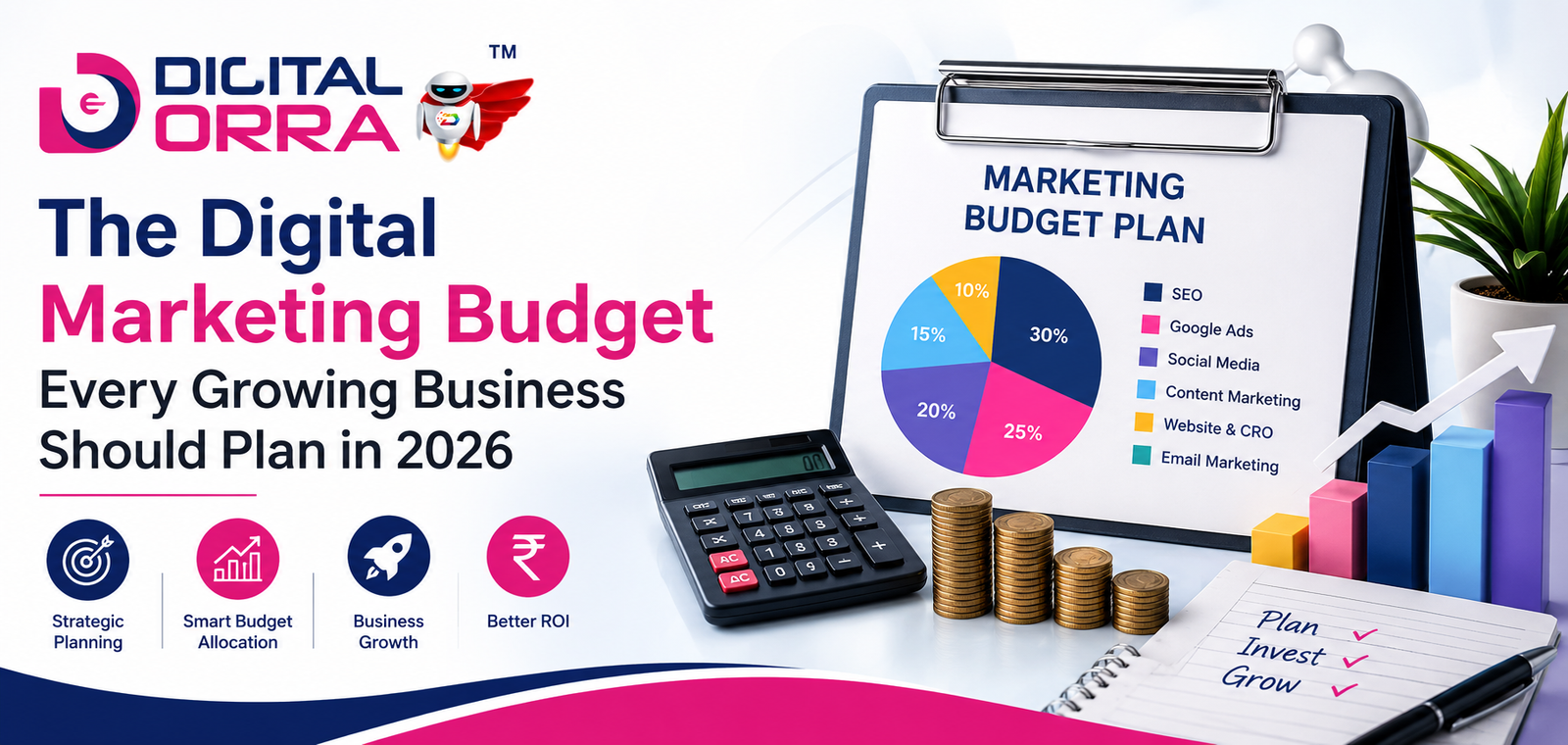
Here’s an example of how businesses can distribute their budget.
Search Engine Optimization (SEO) – 25–35%
SEO helps your website rank higher on search engines, bringing in consistent organic traffic without paying for every click.
SEO includes:
- Keyword research
- Content creation
- Technical optimization
- Link building
- Local SEO
SEO usually delivers strong long-term returns.
Google Ads – 20–30%
Google Ads provide immediate visibility for businesses targeting customers who are actively searching for products or services.
Paid advertising is especially useful for:
- Product launches
- Seasonal campaigns
- Lead generation
- High-competition keywords
Social Media Marketing – 15–20%
Platforms like Facebook, Instagram, LinkedIn, and YouTube help businesses connect with their audience, build trust, and increase engagement.
Social media marketing includes:
- Organic content
- Paid campaigns
- Reels and short videos
- Community management
Content Marketing – 10–20%
Quality content builds authority and supports both SEO and social media efforts.
Content may include:
- Blog articles
- Case studies
- Videos
- Infographics
- Email newsletters
Helpful content attracts customers throughout their buying journey.
Website Improvements – 10–15%
Your website is often the first impression potential customers have of your business.
Budget for:
- Faster loading speed
- Mobile optimization
- Landing pages
- User experience improvements
- Conversion optimization
A high-performing website increases the chances of turning visitors into customers.
Email Marketing and CRM – 5–10%
Email remains one of the most cost-effective digital marketing channels.
It helps businesses:
- Nurture leads
- Promote offers
- Retain customers
- Encourage repeat purchases
Hidden Marketing Costs Businesses Often Overlook
Many companies underestimate their total marketing expenses.
Additional costs may include:
- Graphic design
- Video production
- Marketing automation software
- CRM platforms
- Landing page development
- Analytics tools
- Website maintenance
- Professional photography
Planning for these expenses prevents unexpected budget overruns.
Common Digital Marketing Budget Mistakes
Avoid these mistakes that limit business growth.
Spending Everything on Paid Ads
Paid advertising can generate quick traffic, but once your budget stops, so do your results. Balancing paid campaigns with SEO and content marketing creates long-term growth.
Ignoring SEO
Businesses that neglect SEO often become overly dependent on advertising. Organic traffic is a valuable long-term asset.
Not Tracking Performance
Without monitoring important metrics, it’s impossible to know what’s working.
Track key performance indicators such as:
- Website traffic
- Leads generated
- Cost per lead
- Conversion rate
- Customer acquisition cost
- Return on investment (ROI)
Frequently Changing Strategies
Digital marketing takes time. Constantly changing campaigns before collecting enough data can reduce effectiveness.
When Should You Increase Your Marketing Budget?
Consider increasing your investment if:
- Your campaigns consistently generate profitable leads.
- Customer demand is growing.
- You’re expanding into new locations.
- You’re launching new products or services.
- Competitors are investing heavily in online marketing.
Scaling successful campaigns often produces better returns than starting from scratch.
Why Working with a Digital Marketing Agency Makes Sense
Managing SEO, advertising, content creation, website optimization, analytics, and social media requires specialized expertise.
A professional digital marketing agency offers:
- Experienced marketing specialists
- Access to premium tools
- Data-driven strategies
- Better campaign management
- Faster implementation
- Measurable results
Instead of hiring multiple in-house professionals, businesses can access a complete team while controlling costs.
Final Thoughts
Creating a digital marketing budget isn’t about spending the most money—it’s about investing wisely. Businesses that plan their marketing expenses strategically are better positioned to attract customers, increase brand visibility, and achieve sustainable growth.
Rather than relying on occasional promotions, develop a consistent marketing strategy that includes SEO, paid advertising, content marketing, social media, and website optimization. Review your results regularly, adjust your budget based on performance, and focus on channels that deliver the highest return on investment.
In today’s competitive marketplace, a well-planned digital marketing budget is one of the smartest investments a growing business can make.