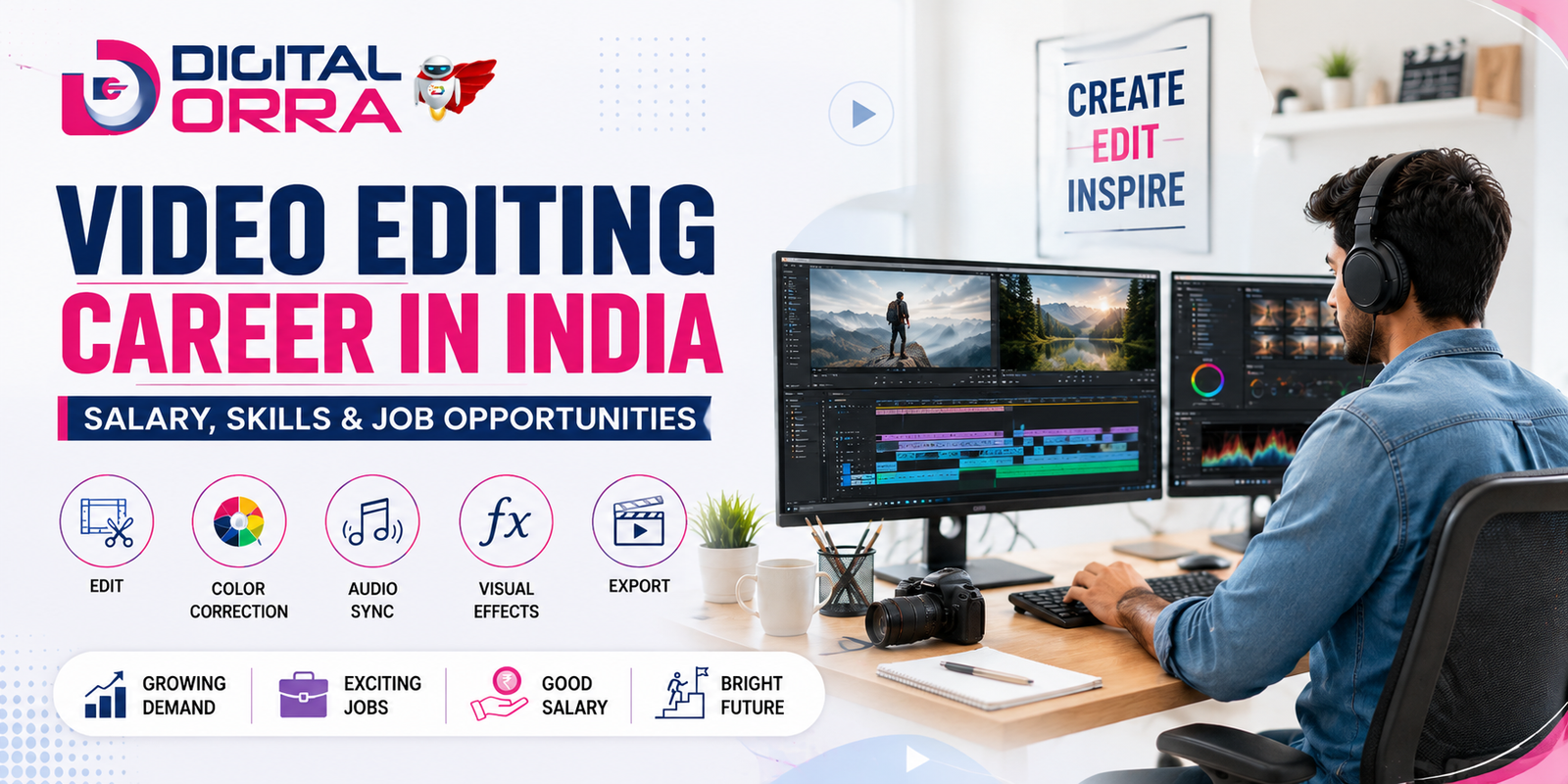
Video is now one of the most powerful forms of digital content. From YouTube videos and Instagram Reels to advertisements, OTT content, corporate videos and online courses, businesses and creators increasingly rely on skilled video editors to turn raw footage into engaging stories.
This growing demand has made video editing a promising career option in India for creative students, graduates and professionals who enjoy storytelling, technology and visual content.
But what does a video editor actually do? What skills are required? How much can a video editor earn in India? And what job opportunities are available?
Let’s explore the video editing career in India, including salary, essential skills, career paths and how to get started.
What Does a Video Editor Do?
A video editor takes raw footage and transforms it into a finished video. Their work can include selecting the best shots, arranging clips, adding transitions, synchronising audio, correcting colours, creating graphics and preparing the final video for different platforms.
Depending on the role, a video editor may work on:
- YouTube videos
- Instagram Reels and short-form videos
- Corporate videos
- Advertisements
- Product videos
- Educational content
- Wedding and event videos
- Films and documentaries
- OTT and entertainment content
- Social media campaigns
- Motion graphics and promotional videos
Video editing is not simply about knowing editing software. A good editor also needs visual storytelling, creativity, attention to detail and an understanding of pacing and audience behaviour.
Is Video Editing a Good Career in India?
Yes. Video editing can be a strong career choice for people who combine creativity with technical skills.
The growth of YouTube, Instagram, OTT platforms, digital advertising, online education and creator-led businesses has created demand for video content across industries. Indeed also notes that demand for video editors is supported by the growth of streaming platforms, OTT content and businesses creating more online and advertising content.
Another advantage is that video editors can choose from several career models. You can work as:
- A full-time video editor
- A freelance video editor
- A social media video editor
- A YouTube editor
- A motion graphics artist
- A post-production editor
- An editor for a production house
- An in-house editor for a brand
- A remote video editor
This makes video editing suitable for both traditional employment and flexible freelance careers.
Video Editor Salary in India
Salary depends on several factors, including experience, location, editing skills, specialisation, employer and the type of content you work on.
According to Indeed’s India salary data updated in May 2026, the average reported salary for a video editor is around ₹18,500 per month, with reported salaries varying considerably by experience, location and employer.
A general career progression can look like this:
| Experience | Approximate Monthly Salary |
| Fresher / Intern | ₹10,000 – ₹20,000+ |
| Junior Video Editor | ₹15,000 – ₹35,000+ |
| Mid-Level Editor | ₹30,000 – ₹60,000+ |
| Senior Video Editor | ₹50,000 – ₹1,00,000+ |
| Specialist / Experienced Freelancer | ₹1 lakh+ potential |
These are indicative ranges rather than fixed salaries. Actual compensation can vary significantly depending on the city, company, portfolio, niche and level of expertise. Current job listings show opportunities across different salary bands, from internships and entry-level positions to roles offering ₹25,000–₹40,000 or more per month.
Which Factors Affect a Video Editor’s Salary?
Your earning potential can increase with:
- Years of experience
- Quality of your portfolio
- Advanced editing skills
- Motion graphics knowledge
- Colour grading skills
- Sound editing knowledge
- Ability to edit short-form content
- Experience with advertising and branded content
- Industry specialisation
- Freelance clients
- International or remote clients
A strong portfolio can be particularly important because employers often want to see what you can actually create, rather than relying only on educational qualifications.
Skills Required to Become a Video Editor
A successful video editing career requires a combination of technical and creative skills.
1. Video Editing Software
You should become comfortable with professional editing tools such as:
- Adobe Premiere Pro
- DaVinci Resolve
- Adobe After Effects
- Final Cut Pro
- CapCut
You don’t necessarily need to master every software program. Start with one professional editing application and gradually expand your toolkit.
2. Visual Storytelling
Good editing is about more than putting clips together.
You need to understand:
- Story structure
- Pacing
- Shot selection
- Timing
- Continuity
- Transitions
- Emotional impact
Visual storytelling is one of the key skills highlighted in professional guidance for video editors.
3. Creativity
Creativity helps you decide how footage should be presented. You may need to experiment with different cuts, music, graphics, transitions and visual effects to create an engaging final video.
4. Attention to Detail
Small mistakes can affect the quality of a video. Editors need to check:
- Audio synchronisation
- Spelling
- Transitions
- Colour consistency
- Background elements
- Timing
- Continuity
5. Motion Graphics
Learning basic motion graphics can make your profile more valuable.
You can create:
- Animated titles
- Logo animations
- Lower thirds
- Text animations
- Social media graphics
- Promotional animations
6. Colour Grading
Colour correction and grading can dramatically improve the appearance and mood of a video.
Understanding exposure, contrast, colour balance and cinematic looks can help you move beyond basic editing.
7. Audio Editing
Poor audio can reduce the quality of even a well-edited video.
Learn the basics of:
- Noise reduction
- Voice enhancement
- Music selection
- Audio levels
- Sound effects
- Voice-over synchronisation
8. Time Management
Video editing can involve tight deadlines and multiple revisions. Being organised and completing projects efficiently is therefore an important professional skill.
Career Opportunities in Video Editing
One of the biggest advantages of this field is the variety of career opportunities available.
1. Social Media Video Editor
Brands need short videos for Instagram, YouTube Shorts, Facebook and other platforms.
You may edit:
- Reels
- Shorts
- Product videos
- Promotional content
- Educational videos
2. YouTube Video Editor
YouTubers and content creators often outsource editing so they can focus on creating content.
Editors may handle everything from raw footage to the final upload-ready video.
3. Advertising Video Editor
Advertising agencies require editors for commercials, social media campaigns, product videos and branded content.
This area can offer opportunities to work on more creative and specialised projects.
4. Corporate Video Editor
Companies create videos for:
- Training
- Internal communication
- Product launches
- Presentations
- Recruitment
- Corporate events
5. Film and OTT Editor
Editors can also work in the entertainment industry, including films, documentaries, web series and OTT productions.
This path can require more specialised knowledge and industry experience.
6. Motion Graphics Artist
If you combine video editing with animation and motion graphics, you can work on advertisements, explainer videos, social media campaigns and branded content.
7. Freelance Video Editor
Freelancing offers the flexibility to work with multiple clients and potentially work remotely.
Freelancers can find clients through:
- Freelance platforms
- Social media
- Personal websites
- Networking
- Direct outreach
- Referrals
How to Become a Video Editor in India
You don’t necessarily need a specific degree to begin learning video editing. While formal education can be useful, practical skills, experience and a strong portfolio are extremely important.
Follow these steps:
Step 1: Learn the Fundamentals
Start with basic concepts such as:
- Video formats
- Resolution
- Frame rates
- Aspect ratios
- Timeline editing
- Audio
- Transitions
- Colour correction
Step 2: Learn Professional Software
Choose one editing platform and learn it properly rather than trying to learn multiple tools at once.
Step 3: Practise With Real Projects
Create your own projects using available footage.
For example, create:
- A YouTube video
- A 30-second Reel
- A product advertisement
- A travel video
- A promotional video
Step 4: Build a Portfolio
Your portfolio can be more valuable than a simple list of software skills.
Create a selection of your best projects and demonstrate different editing styles.
Step 5: Get Practical Experience
Look for:
- Internships
- Freelance projects
- Agency work
- Creator collaborations
- Small business projects
- Personal projects
Indeed also recommends gaining practical experience and building a varied portfolio when starting a video editing career.
Step 6: Start Applying for Jobs
Once you have a portfolio, start applying for roles such as:
- Video Editor
- Junior Video Editor
- Social Media Video Editor
- YouTube Video Editor
- Motion Graphics Designer
- Post-Production Editor
Video Editing Career: Job vs Freelancing
Both options have advantages.
| Full-Time Job | Freelancing |
| Regular salary | Flexible earning potential |
| Structured work environment | Flexible working hours |
| Team collaboration | Multiple clients |
| Professional mentorship | Greater independence |
| Stable career path | Potential for international clients |
For beginners, a full-time role or internship can be useful for gaining experience. Once you develop strong skills and a portfolio, freelancing can become an additional or alternative career path.
How to Increase Your Earning Potential
If your goal is to build a higher-paying video editing career, don’t stop at basic cuts and transitions.
Consider developing specialised skills such as:
Video Editing + Motion Graphics + Colour Grading + Sound Design + Storytelling
You can also specialise in a specific niche such as:
- YouTube
- Short-form content
- Advertising
- Corporate videos
- Real estate
- E-commerce
- Education
- Gaming
- Wedding films
- OTT content
Specialisation can help you position yourself more clearly in the job and freelance market.
Is a Video Editing Course Worth It?
A structured video editing course can be useful for beginners who want to learn editing systematically instead of relying entirely on random tutorials.
A good course should ideally include:
- Editing fundamentals
- Professional editing software
- Practical projects
- Video storytelling
- Audio editing
- Colour correction
- Motion graphics
- Portfolio development
Most importantly, look for hands-on practice. The objective should not simply be to complete a course but to finish it with real projects that you can showcase to employers or clients.
Frequently Asked Questions
Is video editing a good career in India?
Yes. Video editing offers opportunities across social media, YouTube, advertising, corporate communication, entertainment, education and other digital industries.
What is the salary of a video editor in India?
Current salary data varies by source and experience. Indeed reported an average of roughly ₹18,500 per month in India in May 2026, while experienced editors and specialists can earn substantially more.
Can I become a video editor without a degree?
Yes. Practical skills, software knowledge, experience and a strong portfolio can be important factors when starting a video editing career.
Which software is best for video editing?
Adobe Premiere Pro, DaVinci Resolve, Final Cut Pro, After Effects and CapCut are among the commonly used tools. The best choice depends on the type of content and your career goals.
Can video editors work from home?
Yes. Many editing projects can be completed remotely, making video editing suitable for freelance and remote work.
How long does it take to learn video editing?
You can learn the fundamentals within a few months with consistent practice. Becoming job-ready depends on your practice, project experience, software proficiency and ability to build a portfolio.
Start Your Video Editing Career
Video editing has evolved from a specialised post-production skill into a valuable digital career. As brands, creators, agencies and businesses continue to invest in video content, skilled editors can explore opportunities across multiple industries.
If you’re creative, enjoy visual storytelling and are willing to practise consistently, video editing can become a rewarding career in India.
The best time to start is by learning the fundamentals, working on real projects and building a portfolio that demonstrates what you can create.
For aspiring editors, skills + practical experience + a strong portfolio can be the foundation for a successful career.